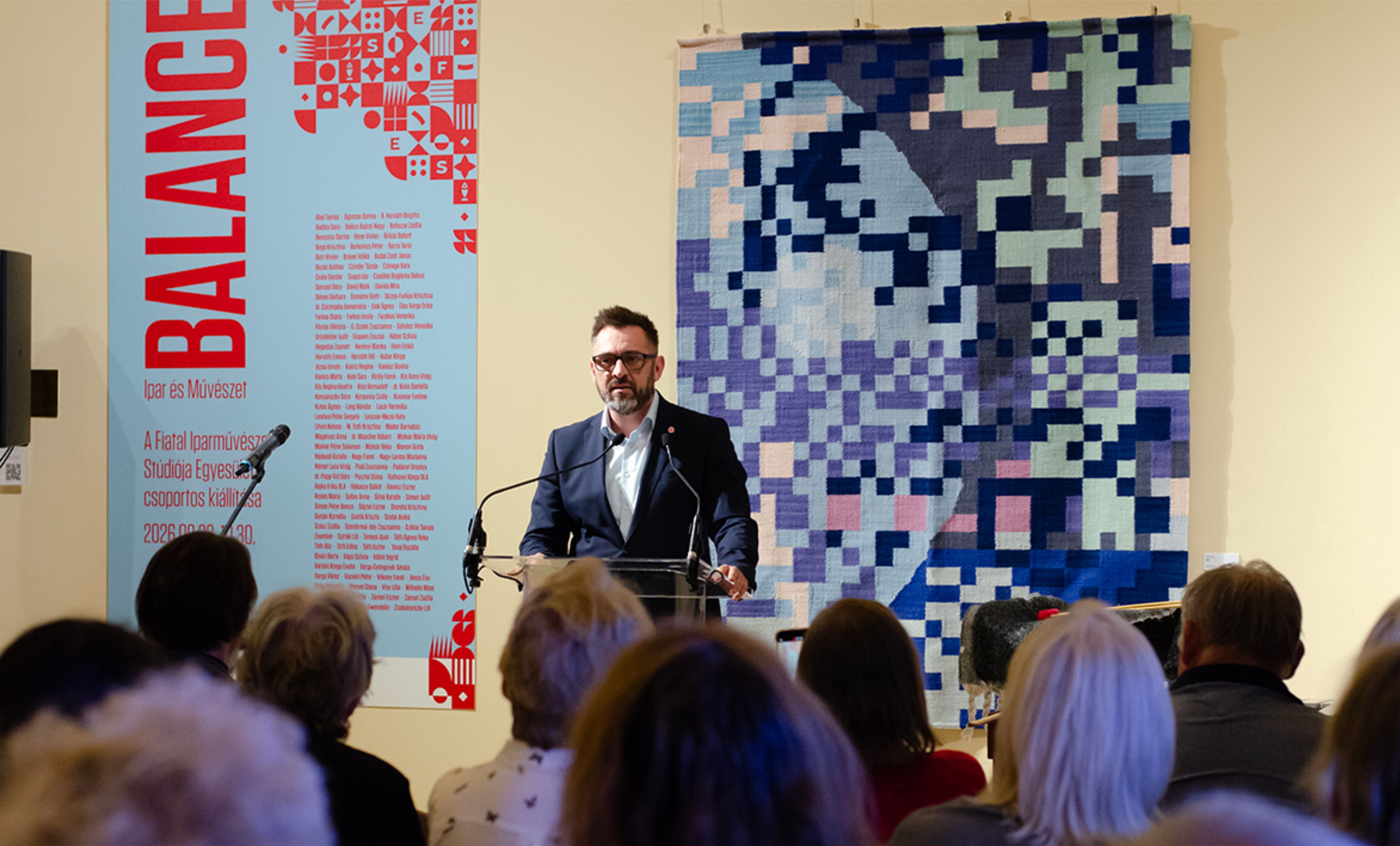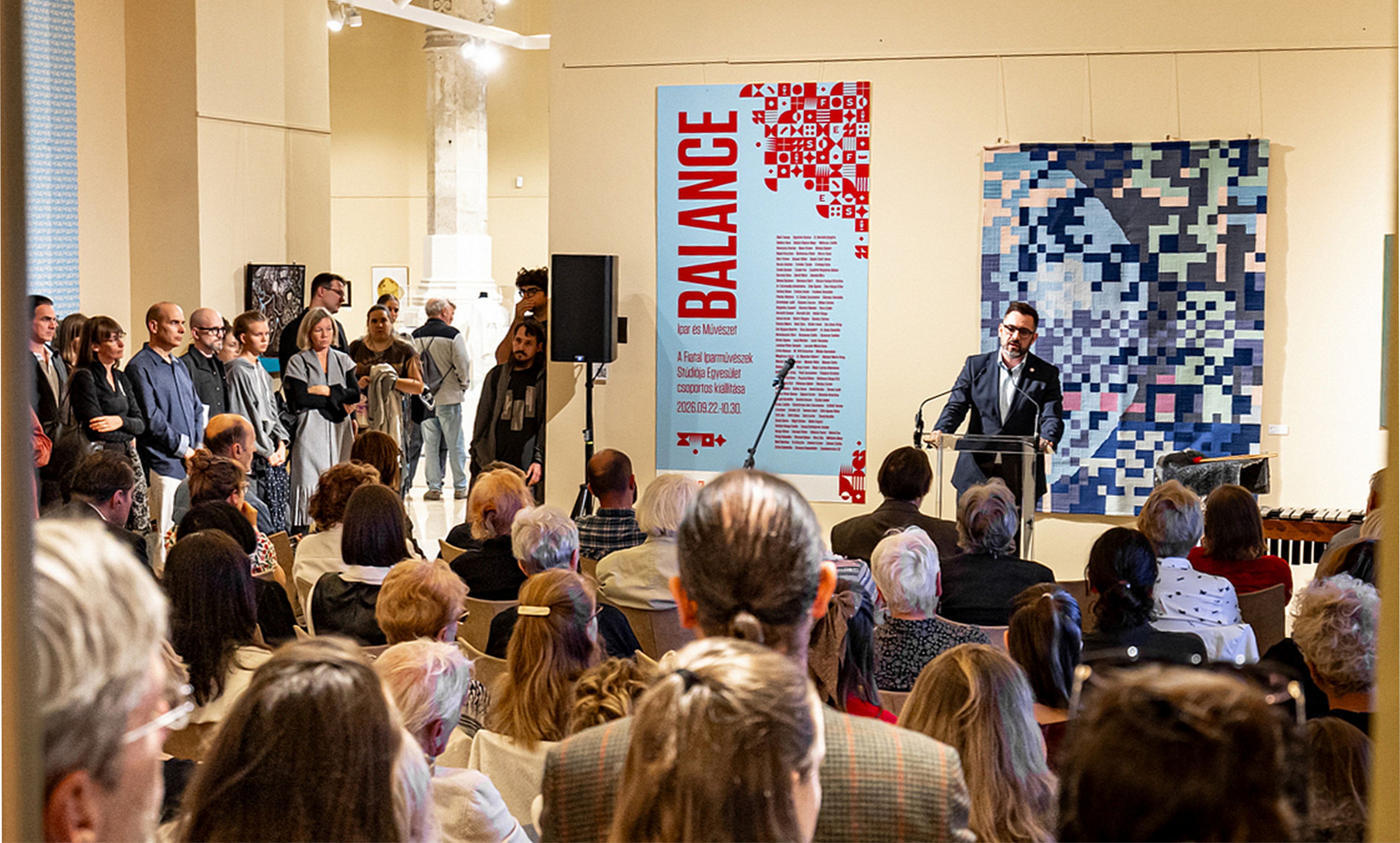
Opening speech by Dr. Zsolt Sári, Secretary of State for Public Collections and Heritage Protection - BALANCE - Industry and Art - a FISE group exhibition, Pesti Vigadó
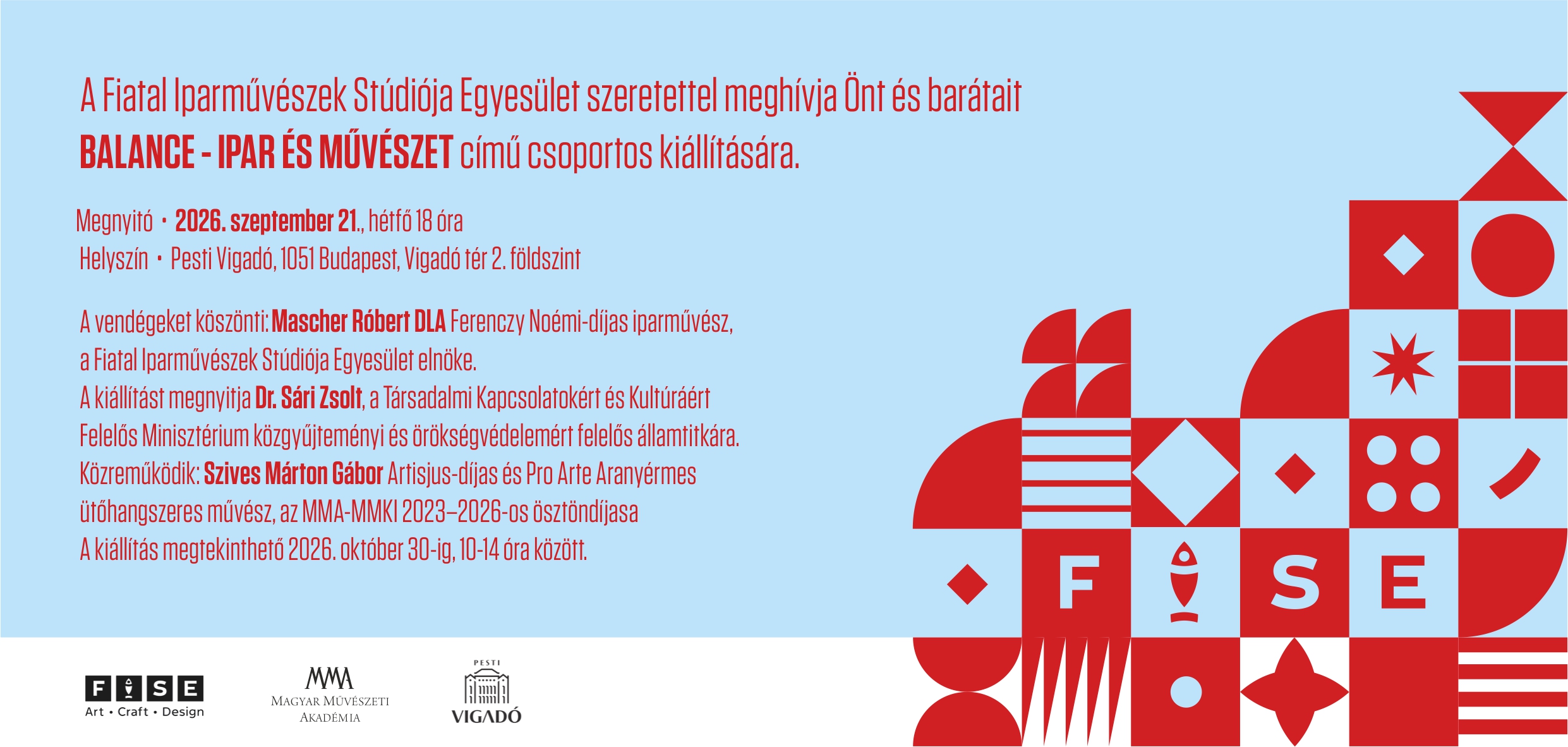
BALANCE - Industry and Art - a FISE group exhibition
Opening on Monday, September 21, 2026, 6 p.m.
Location: Pesti Vigadó, 1051, Budapest, Vigadó tér 2.
Dr. Zsolt Sári
Secretary of State for Public Collections and Heritage Protection
Ministry for Social Relations and Culture
Opening speech
Dear Mr. President! Dear Artists! Ladies and Gentlemen!
The title of this exhibition is a single word, but this single word encapsulates the everyday work of an entire profession. The applied artist is constantly balancing: between usability and beauty, the individual piece and the series, the client's needs and his own artistic vision, he must repeatedly find the point where the object works and speaks to you at the same time. From the outside, the two sides can easily seem to be opposites. The more than one hundred works on display in the upper exhibition space convince the visitor that the two belong together.
As an ethnographer and museologist, I have spent three decades among objects, so this title touches me personally. In the Skanzen, I saw day after day that the tools of old peasant households were shaped by hand and eye at the same time: the shape of a jug was determined by carrying water, the line of a chair by the body of the seated person, and the pattern of a woven fabric by the rhythm of the loom, and yet they all turned out beautiful. Applied arts carry this knowledge forward with today's materials, answering today's questions, and whoever walks through this exhibition from interior design to ceramics, textiles, goldsmithing and glass to visual communication will see the same continuity.
The history of the Young Applied Artists' Studio Association is instructive in itself. It was founded in 1982 by designers fresh out of the College of Applied Arts because they wanted a workshop where they could learn from each other as beginners, and where the finished work would be assessed by an understanding, friendly, but honest critique. This intention has not changed since then. Today, the association brings together more than three hundred and fifty artists in ten departments, organizes fourteen to sixteen exhibitions a year in the gallery on Kálmán Imre Street, operates a creative house in Mátranovák, and the members’ own initiative has led to such prestigious events as the Design Duel or the Budapest Contemporary Jewelry Week. The Hungarian Design Council recognized this work with a Design Management Special Award in 2018, and next year the association will celebrate its forty-fifth birthday.
Why is all this important to the cultural government? Because FISE has been proving for four and a half decades that a professional community is able to organize, maintain, and renew itself if they are allowed to work. This is how I see the state’s job: it must create the framework, infrastructure, and resources, and then it must listen to those who know the profession from the inside. That is why we have met again with the professional organizations and why we are establishing a creative arts department in the ministry, whose task is to ensure that Hungarian design receives the international attention it has long deserved. That is why we also consider the renovation of the Museum of Applied Arts a priority: one of the most beautiful buildings in the country has been closed for nine years, and an entire generation has grown up knowing the masterpieces of Hungarian applied arts only from books. We must repay this debt.
That is also why it is so good that contemporary applied arts can be seen in such completeness here, in the Vigadó. Moreover, the exhibition does not end in the upper room: in the basement gallery, a joint exhibition of Czech and Hungarian students, workshops, craft activities and roundtable discussions await visitors. This event is therefore also a meeting place, where the designer can find out how those who will use his work see it, and the visitor can understand how much thought goes into a seemingly simple object. I encourage you to make use of this: ask questions, debate, and come back again by the end of October.
I thank the association’s management, the curators, and all the exhibiting artists for their work in creating this exhibition, and to the Pesti Vigadó for their hospitality.
Thank you for listening. I hope you find at least as much joy in walking among the objects as there is thought and work in them.